
Akkari
The AI execution system for customer operations — from the first sales call through success and expansion.
2x
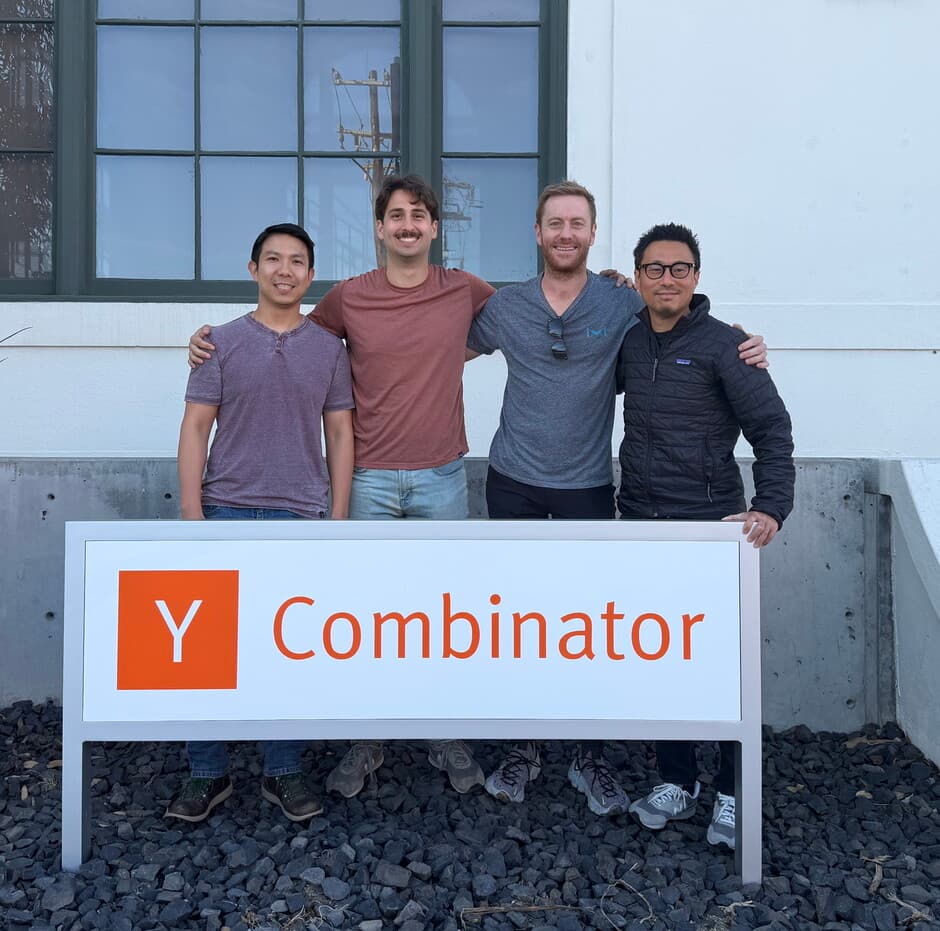
YC founders
OrderAhead (W11) → Square; BLADE → $1.2B+/mo
Tier 1
Angel signal
Fidji Simo · Tony Xu · Eric Wu · Othman Laraki · Logan Green
Backed by
A handpicked angel list of operators who built — and scaled — the exact GTM problem Akkari is solving.
Thesis
Every customer interaction at every B2B company creates a long tail of operational work: a commitment made on a sales call, a bug surfaced in Slack, a security question asked for the third time, a fix that shipped but never got back to the customer, an expansion signal scattered across email and meeting notes. At an early-stage startup, this usually lives in people's heads. That works until it doesn't.[3]
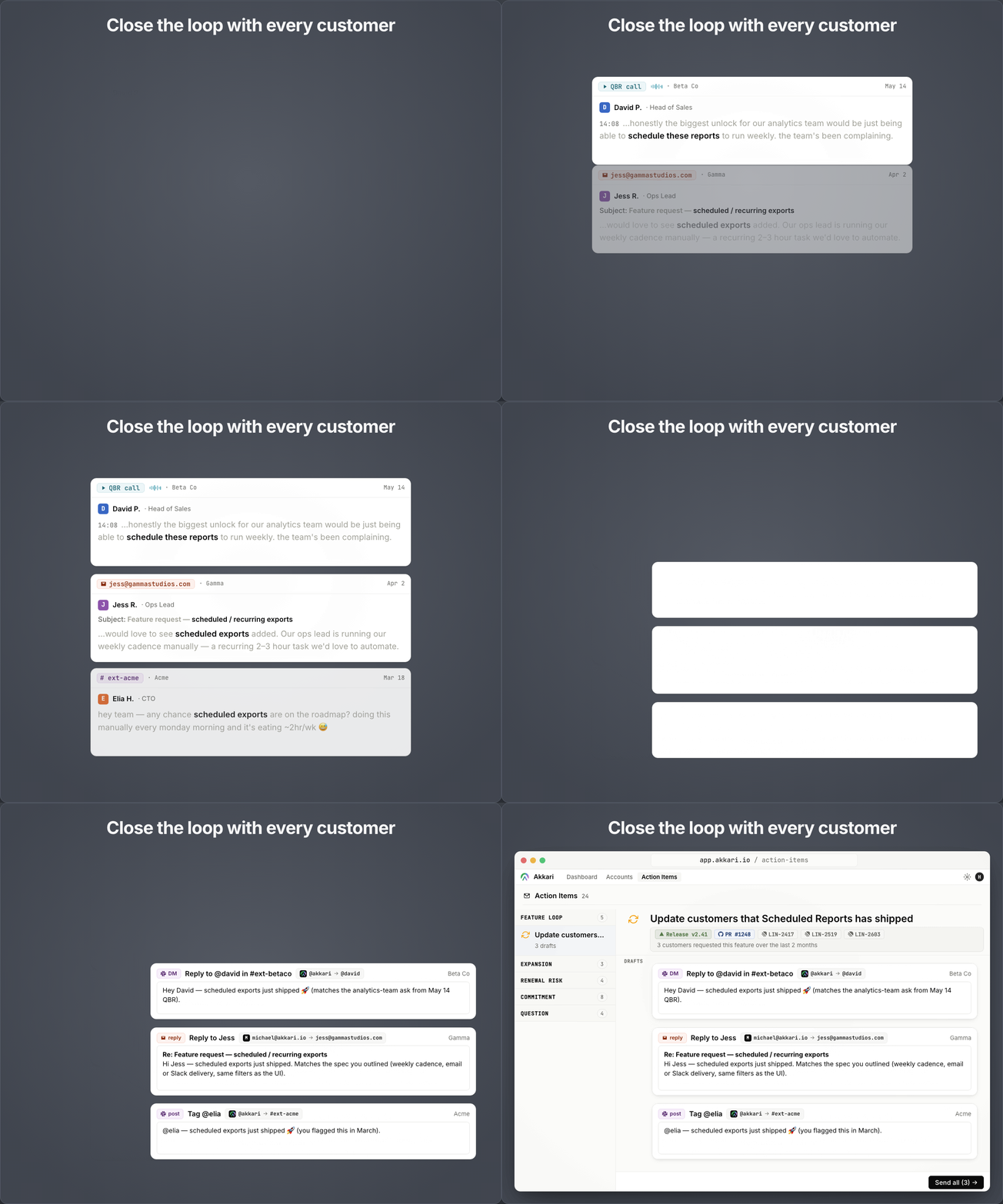
Akkari captures every commitment, issue, request, and opportunity across the customer surface (Slack, calls, meetings, email, Discord, CRMs) and executes the actual work to close each loop — drafts the reply, files the ticket, schedules the meeting, opens the PR, sends the customer the update when the fix ships.[2][3]
Recording work is not the same as doing it. Akkari is the AI execution layer that turns conversations into completed customer outcomes.
- 01
The wedge is execution, not transcription. A decade of GTM tooling — Gong, Chorus, Granola, Fireflies, Salesforce Einstein — produced excellent records of customer conversations. None of it does the work those conversations create. Akkari is the first product built around the assumption that an AI should not just summarize the call, it should finish the to-do list the call produced.
- 02
The founders have lived this problem at every scale. At OrderAhead (W11, acquired by Square), Jeff and Henry built the product and Michael built the GTM org — 30-person sales team, 2,500 contractors, thousands of merchants. They learned the same lesson three times: customers are won or lost in the follow-through. At BLADE, Jeff and Henry scaled to $1.2B+ in monthly trading volume on the back of the same operational rigor.[5][6][7]
- 03
The angel list is the validation. Fidji Simo (CEO, OpenAI Apps), Tony Xu (DoorDash), Eric Wu (Opendoor), Othman Laraki (Color), plus Liquid 2, Tuesday Capital, YC, and Orange Collective.[2] Every name on the list ran the exact customer-operations problem at scale and chose to back the team building the solution.
- 04
Validation is happening in real time. Some of the most credible teams in the P26 batch are already customers, as well as later-stage companies including a unicorn app sec company.[3] The pull is showing up simultaneously across founder-led sales, customer success, and PLG-to-enterprise conversion — which is exactly what you'd expect from a horizontal customer-ops layer.
Problem
Every customer interaction creates a long tail of operational work. At an early-stage startup, all of it lives in people's heads.
A customer reports a bug in Slack. A founder promises a pricing breakdown on a call. A prospect asks the same security question three times. An engineer ships the fix, but nobody tells the customer. A champion is ready to expand, but the blockers are scattered across email, Slack, Linear, and meeting notes.[3]
At ten customers, the CEO holds it in their head and maybe a Notion doc and some internal Slack channels. But past that, half the team is spending half their week on the operational work created by the other half — and customers are slipping through the cracks anyway.
The conventional response is to layer in more tooling: a CRM for accounts, a ticketing system for support, a call-recording tool for sales, a customer success platform for retention. Each surface has its own database, its own AI summary feature, and its own narrow notion of what "the customer" is. None of them close the loop on the actual work.
The reason the best teams win is not better product or better messaging. They win because they follow through faster, more consistently, and with better judgement than everyone else. That's what Akkari is making available off-the-shelf.[3]
~10 calls/wk
When pre-sales breaks down
Per Akkari's onboarding guidance
~10 customers
When post-sales breaks down
Operational work stops fitting in your head
5+ surfaces
Where customer signal lives
Slack · email · calls · Discord · CRM · Linear
Why Now
For the first time, AI can do the work — not just describe it.
Two preconditions had to come true at once: companies needed a complete digital record of their customer work, and AI agents needed to be reliable enough to act on it.
The shift
Now · agentic execution
Doing the work
Akkari. Drafts the reply, files the bug, schedules the meeting, opens the PR, sends the customer the update when the fix ships. The job is no longer to read the summary — it's to review the action.
AI wasn't meant to just store context or summarize conversations. It should execute the work those conversations create.[3] The model capability — Claude Sonnet 4.6 / Opus 4.7 (1M context), GPT-5, multi-step agentic tool use — finally lets a horizontal product reach across Slack, email, Linear, GitHub, and a CRM in a single coherent action. The substrate is finally there.
The proof is already in production — one channel over. The adjacent category, AI support agents, has demonstrated at enterprise scale that agentic execution on customer conversations works. Intercom's Fin reports an average 76% resolution rate across 8,000+ customers and charges $0.99 per resolved conversation — outcome-based pricing only exists when the outcome is reliable.[20] Sierra crossed $150M ARR in eight quarters and serves over 40% of the Fortune 50.[11][12] Gartner projects agentic AI will autonomously resolve 80% of common customer service issues by 2029.[19] Every one of those proof points is confined to the inbound ticket queue. The same reliability, pointed at the rest of the customer surface — commitments, follow-ups, onboarding, expansion — is the opening Akkari is built for.
One of the most experienced founder teams I've come across. These guys really know GTM. I'll be following closely!

Sherwood Callaway[3]
Founder & CEO · Sazabi (P26)
Proud to be customers! One of the fastest moving teams.

Muvaffak Onuş[3]
Co-founder · Limrun (P26) — Akkari customer
Proud to be one of the early design partners. The guys are absolute beasts — extremely smart and experienced. Very excited to see their product grow.

Arseniy Shishaev[3]
Co-founder · Superlog (P26) — Akkari design partner
Three preconditions converged in the same six-month window.
Complete digital record of customer work. Slack/Teams replaced email for internal coordination. Loom/Granola/Gong recorded the calls. Email APIs and webhooks turned every external touchpoint into structured data. For the first time, the entire customer surface — internal and external — is machine-readable. The data is sitting there, waiting to be acted on.
Agent reliability crossed the bar. A year ago, a multi-step agent that read a Slack thread, classified it as a bug, opened a Linear ticket with the right team and severity, and notified the customer when the PR merged — without a human in the loop — was a research demo. Today, on Claude Sonnet 4.6 / Opus 4.7 (1M context) and GPT-5, it's a production-grade workflow that the model can execute end-to-end with the right harness. Akkari's bet is that the harness is the product.
Builders feel the pain acutely now. Modern AI-native startups ship 5–10× faster than two years ago (the Sazabi thesis). The downstream effect: more shipped features → more customer commitments → more follow-ups → more operational work per founder-hour. The "outer loop" problem Sherwood Callaway named for observability has a customer-operations twin, and Akkari is the team building for it.
The best teams do not win just because they have better product or better messaging. They win because they follow through faster, more consistently, and with better judgement than everyone else. We're building Akkari to make that level of execution available to every startup.
How It Works
Detect signal. Triage against account context. Execute the work.
Concrete loops Akkari closes today.
Pre-sales follow-through. Move a lead from a vague next step to a completed follow-up — the pricing breakdown promised on the call, the security questionnaire requested in email, the demo recording the prospect asked to share with their team — drafted, sent, and tracked.[2]
Bug-report to merged PR. Convert bug reports and feature requests from Slack, calls, and emails into Linear tickets with the right team and severity. When the PR merges, Akkari notifies the right customers — automatically.[2]
Onboarding unblocking. Turn onboarding blockers — missing API access, undocumented integrations, security review prerequisites — into queued action items routed to the right internal owner.
Quiet-churn early warning. Spot the silent signals — falling usage, missed check-ins, a champion gone quiet, a tonal shift in a thread — and trigger the save play before renewal becomes a fire drill.
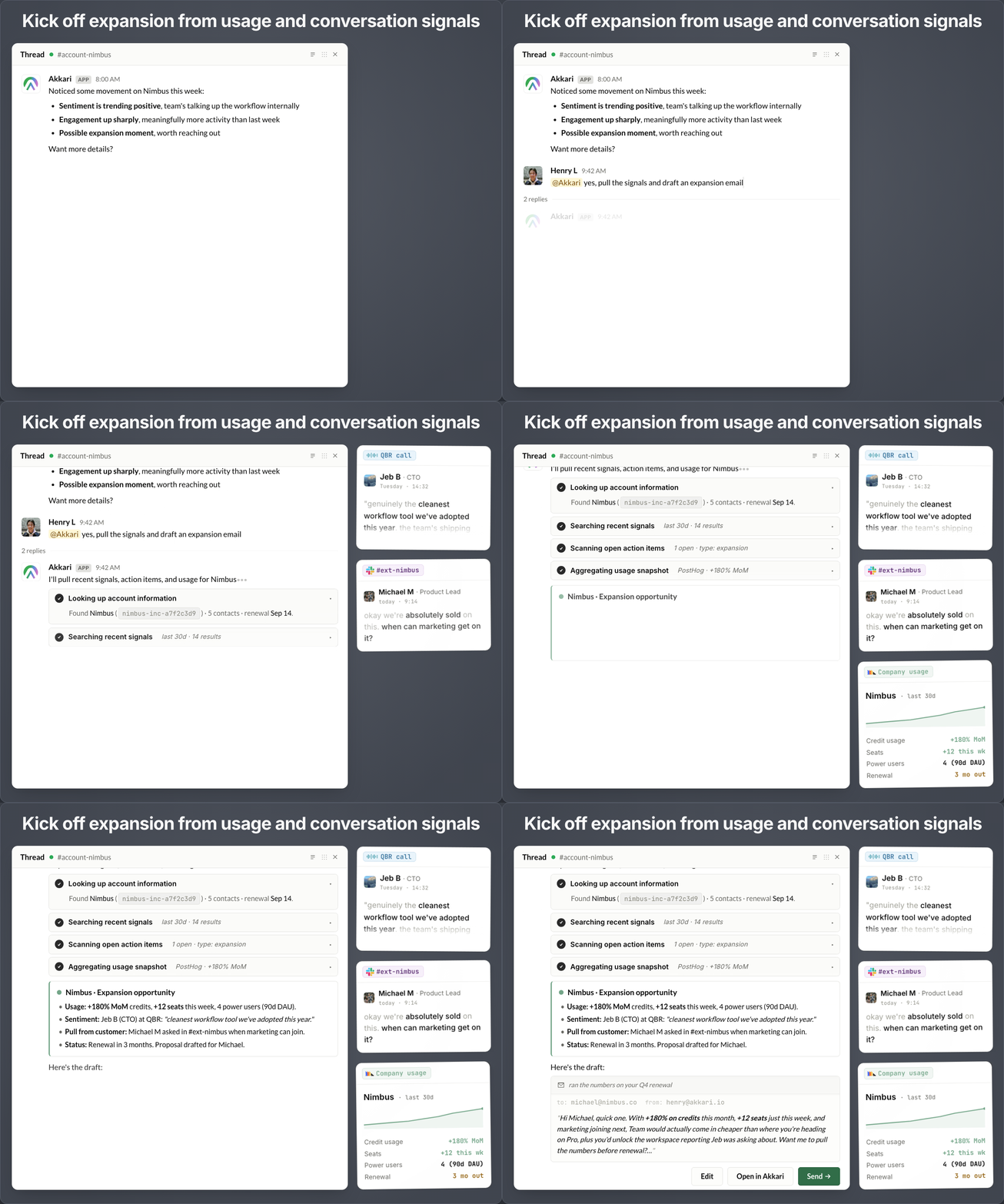
Expansion play orchestration. Detect usage spikes and conversation signals indicating expansion readiness. Surface the open commitments, the unresolved blockers, and the buying signals into a single play the AE can run — or that Akkari can run with review.
Where signal comes from — and where action goes out
IntegrationsAkkari is horizontal by design. Single-channel incumbents — a CRM AI, a ticketing AI, a meeting-notes AI — can only see one slice of the customer. Akkari sees the whole surface and closes loops across it.[2]
The Long Arc
A living model of how a company actually operates.
Customer-operations execution is the wedge. The durable bet is the operational memory layer that compounds underneath it.
The wedge is execution today. The compound asset is the model of the customer.
Step one — close the loops. Akkari proves it can act reliably on every customer signal: commitments, blockers, bug reports, expansion triggers, churn signals. The product earns trust action-by-action; users escalate it from drafts-only to fully autonomous on the actions where it's earned the right.
Step two — build the operational memory. Every action, follow-through, and outcome compounds into a structured record of how this customer relationship actually works: who decides, what they care about, what blockers recur, what signal precedes expansion, what precedes churn. The system gets sharper customer by customer, week by week.
Step three — become predictive. Once you have a structured model of how customers operate, you can run it forward. Which deals will close. Which accounts are about to churn. Which expansion plays will land. Where the next handoff is going to break. Akkari's framing: a living model of how companies actually operate — and one that becomes predictive over time.[3]
Akkari is our wedge towards building a living model of how companies actually operate — and one that becomes predictive over time.
Market
Three concentric markets. Akkari has commercial signal in all three already.
Near term — YC P26 and AI-native startups. The densest concentration of the buyer is in the current YC batch: technical founders who feel the customer-operations pain acutely at 10–50 customers and have authority to switch tools in a day.[3]
Mid term — Seed-to-Series B B2B SaaS. Companies that have outgrown the founder-in-everyone's-DMs phase and are starting to lose deals and accounts to follow-through gaps. Hundred-engineer-or-less GTM orgs where a single VP-Sales or VP-CS can decide. Akkari acts as an always-on operations layer across the entire customer team.
Long term — the AI operating system for companies. The category sitting between CRM (system of record) and meeting intelligence (system of capture) is system-of-execution. None of the incumbents own it. Salesforce, HubSpot, Gong, Outreach, Salesloft, Gainsight, Zendesk — every one of them has tried to add an "AI agent" surface. None of them ship execution across all channels because none of them sit across all the channels.
The software TAM is the floor, not the ceiling
Chart
AI for customer service: $12.06B (2024) → $47.82B (2030E) at 25.8% CAGR.[17] AI agents across all applications: $7.84B (2025) → $52.62B (2030E) at 46.3% CAGR.[18] Both measure software spend on the support/ticket slice. A system-of-execution prices against the labor line — the AE-hours, CS-hours, and founder-hours currently consumed by follow-through — which is why Sierra and Decagon command revenue multiples that look irrational against the software TAM and reasonable against the headcount they displace.
Source · MarketsandMarkets press releases (2025)
Competitive landscape
Four categories adjacent to Akkari. None of them execute across the full customer surface.
Each adjacent category has a structural limit. Akkari's horizontal, execution-first wedge is the answer to all four.
Capital is flooding the vertical-agent layer — and converging on one channel
Chart
Post-money valuations at each disclosed round. Sierra: $175M at $4.5B (Oct 2024), $350M at $10B (Sept 2025), $950M at ~$15.8B (May 2026).[11][12][13] Decagon: $131M Series C at $1.5B (June 2025), $250M Series D at $4.5B (Jan 2026) — a 3× markup in six months, followed by an employee tender at the same price in March.[14][15][16] Hover for round details.
Source · TechCrunch · CNBC · Decagon announcements (2024–2026)
Read correctly, the capital flood is a map of where the giants aren't.
Roughly $1.3B went into Sierra and Decagon alone in the twelve months to May 2026 — and Forethought added a $25M Series D the same month.[11][14][21] Read one way, that's a crowded space. Read correctly, it's the strongest possible validation that enterprises pay real money for AI that acts on customer conversations.
Sierra and Decagon converged on inbound support because resolution rate is measurable and the deployment is self-contained. Their pricing models (per resolution) and multi-month enterprise rollouts anchor them to the ticket queue — every dollar of their roadmap is committed to resolving more tickets, faster, for bigger logos.
The unticketed majority of customer operations — the commitment made on a call, the champion gone quiet, the expansion signal buried in a Slack thread — has no incumbent and no per-resolution business model defending it. That is Akkari's lane, and the $15.8B comp at the end of the support-only path is what makes the horizontal version worth underwriting at seed.
Akkari's positioning
Akkari is the horizontal AI execution layer for customer operations. CRMs hold the record. Meeting tools capture the conversation. Support agents clear the queue. Akkari is the system that closes every loop those records and conversations create — across every channel, for every customer, end-to-end.
Founder deep dive
Three founders. One prior YC company together. One $1B+ exchange. One thesis they earned the hard way.
Founders

Jeffrey Byun
Repeat FounderExitedCo-founder & CEO
2x YC founder (W11, P26). Previously co-founded OrderAhead (W11) — a mobile ordering platform that scaled to millions of users and thousands of merchants before being acquired by Square. Then founded BLADE Holdings, a crypto derivatives exchange backed by Coinbase, SV Angel, Slow Ventures, Justin Kan, and Adam D'Angelo, which reached $1.2B+ in monthly trading volume. Started his career trading credit derivatives at Morgan Stanley. MIT and University of Pennsylvania.

Henry A. Lee
Repeat FounderExitedCo-founder
Co-founded OrderAhead (W11) as CTO with Jeff — acquired by Square. Then CTO/co-founder at BLADE. Earlier engineer at Increo Solutions (acquired by Box). Stanford CS. Deep technical operator across two prior YC companies with Jeff.

Michael Moore
Repeat FounderExitedCo-founder
Joined OrderAhead in 2012 as one of the first 10 employees and grew with it through acquisition — Account Executive → Manager (Merchant Growth) → Head of Sales & Success → VP Sales & Operations → Sales & Success Lead at Square post-acquisition. Managed a 30-person GTM team and 2,500 contractors at peak. Later COO at PlayVision and VP of Operations at Sittercity. UNC Chapel Hill. Has lived the customer-operations problem from the inside at every scale.
Risks & mitigations
What we're watching
References
- [1]Akkari — YC Profile
- [2]Akkari — Company Website
- [3]Akkari — Launch on Bookface (YC internal, P26)
- [4]OrderAhead (W11) — YC Profile (acquired by Square)
- [5]Jeffrey Byun — LinkedIn
- [6]Henry A. Lee — LinkedIn
- [7]Michael Moore — LinkedIn
- [8]Jeffrey Byun on X (@jeffbyun)
- [9]OrderAhead — Wikipedia (founded 2012, acquired by Square late 2016, $10.5M total raised)
- [10]Akkari — Launch YC (public launch post)
- [11]Sierra raises $950M as the race to own enterprise AI gets serious — TechCrunch (May 4, 2026)
- [12]Bret Taylor's Sierra raises nearly $1B in latest AI capital push — CNBC (May 4, 2026)
- [13]Bret Taylor's Sierra raises $350M at a $10B valuation — TechCrunch (Sept 4, 2025)
- [14]Decagon's $250M Series D at $4.5B — Decagon (Jan 28, 2026)
- [15]Decagon raises $131M Series C at $1.5B valuation — Decagon (June 23, 2025)
- [16]Decagon completes first tender offer at $4.5B valuation — TechCrunch (Mar 4, 2026)
- [17]AI for Customer Service Market worth $47.82B by 2030 (25.8% CAGR) — MarketsandMarkets
- [18]AI Agents Market worth $52.62B by 2030 (46.3% CAGR) — MarketsandMarkets
- [19]Gartner: agentic AI will autonomously resolve 80% of common customer service issues by 2029 (Mar 2025)
- [20]AI customer service agent pricing comparison (Fin: 76% avg resolution across 8,000+ customers, $0.99/resolution) — Fin.ai
- [21]Decagon, Sierra AI and the race to build customer support agents — Upstarts Media (May 2026)